Builders of the Week #1: Scholé, Mallow, StudyStash, Teachoo and Kholo
Published on October 08, 2026 · by Ivan Chagas
Verdict
Five distinct bets, one shared question: where does AI really help people learn — and where does it just pretend to?
This is the first issue of Builders of the Week: a column where I analyze what is being built in education around the world — and, more importantly, what we can learn from it. It is not a news bulletin. The news is only the raw material. The product here is the interpretation of someone who spends his days building edtech, not watching from the outside.
I am Ivan Chagas, instructional designer and product builder. I have worked in education since 2012 and, at EduBuilders, I build products, apps and learning experiences with AI — always in this order: the learner first, then the business, and technology last. It is through that lens that I read each launch below.
The reference week is September 28 to October 4, 2026. Not every project was born in those seven days — some came into the spotlight because of a round, an acquisition or a debut that put them on the radar.
How to read this review (a transparency note)
I rate each builder on three fronts — Product, Technology and Business — with a score from 1 to 5 on each, summarized in the Venn diagram at the end of every card. Tip: technical terms marked with a open a quick explanation when you click them.
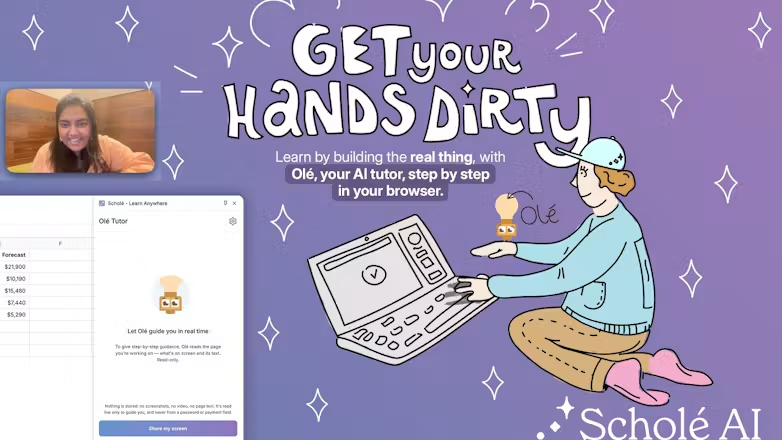
Scholé — learning by doing, inside your own work
It is the most aligned with what I stand for, so it opens the issue. schole.ai · Product Hunt
Images: courtesy / Scholé
Product
- Problem: the “watch the course and then try to apply it” model wastes most of what was taught. The gap between learning and doing is where knowledge evaporates.
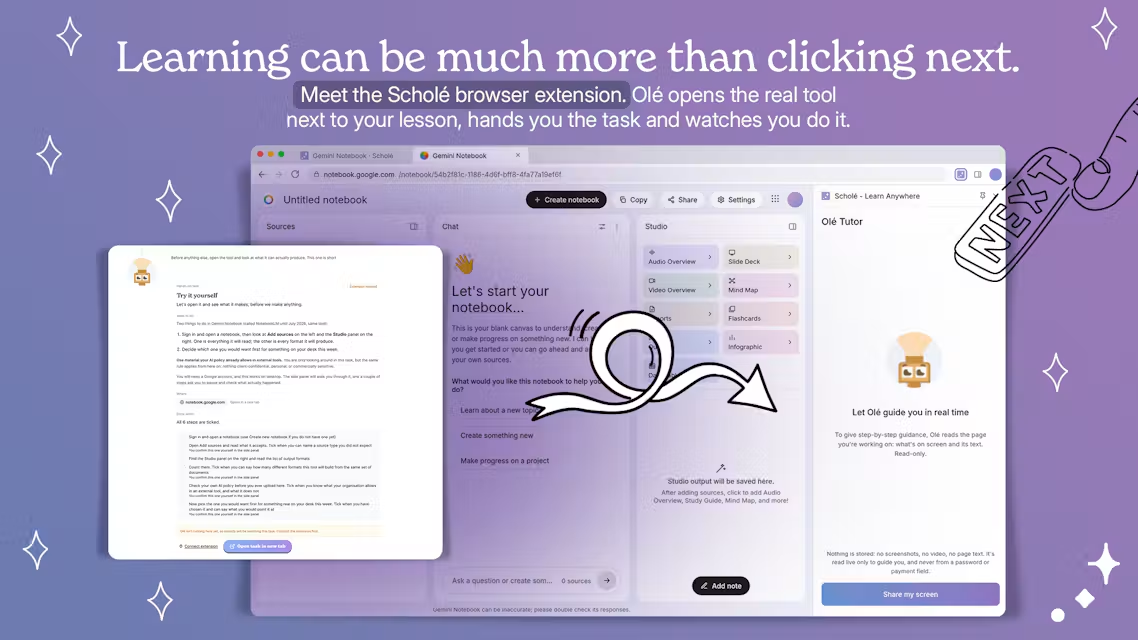
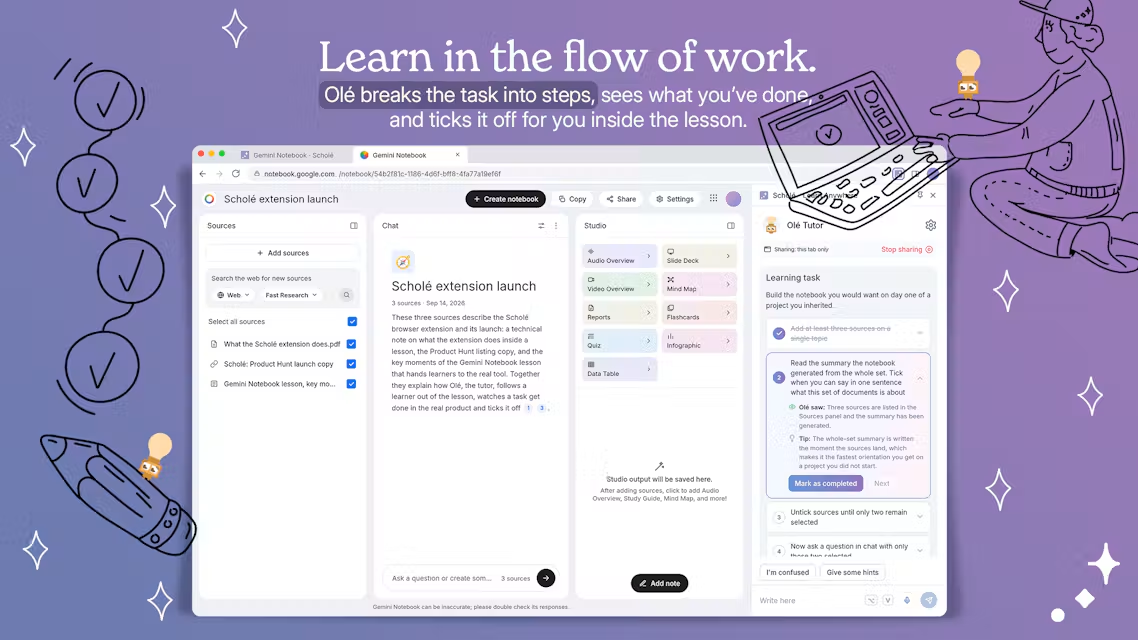
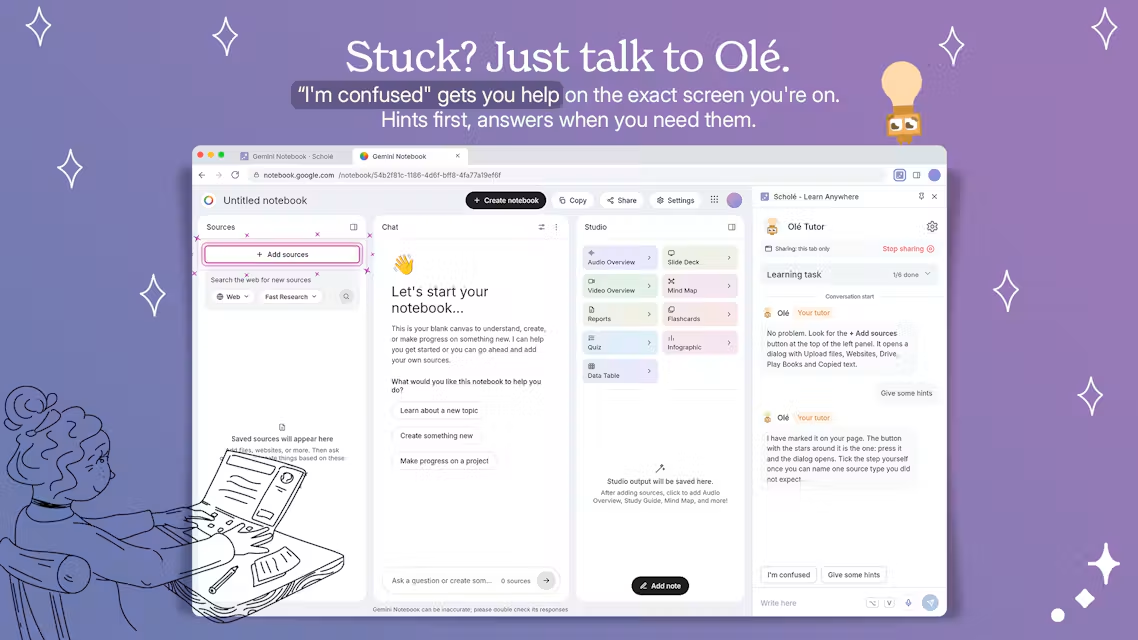
- How it solves it: short lessons, generated in real time from your role, your tools and your tasks, in a “one lesson, one action, done” logic. You do not study about the tool — you use it with a tutor over your shoulder.
- Audience: professionals and teams, focused on enabling people to use AI in real work.
- What I found interesting: it swaps content consumption for assisted execution. The as a memory of what you already master is the product’s smartest decision.
- What I would do differently: I would make sure the reduces help over time — otherwise autonomy never arrives. And I would harden the pedagogical quality control of the content generated on the fly: that is the point I would audit first.
- What we can learn: corporate learning rarely suffers from a lack of content. It suffers from the distance between the lesson and the task — and whoever closes that distance wins.
Technology
- What we know: there is an agent (“Olé”) that profiles the learner and sequences the lessons, backed by a curated , with answers in the client’s own flows and materials.
- What I think: the graph is not decoration — it is what lets the system remember what you already master and not repeat it. The is probably done over the company’s own documentation (something in the spirit of ), and that is what swaps “generic course” for “training that speaks your language”.
- What you can learn from this: if you are going to teach something that changes fast (tools, internal processes), a fixed course is born outdated. The grounding + progress graph pairing is the way to go when the content needs to be current and personal. The real cost: you trade the simplicity of a video LMS for a system that demands source curation and quality control over what the AI generates.
Business
- General reading: classic B2B enablement SaaS, but riding the hottest wave of the moment — teaching companies to use AI. The Product Hunt spotlight and the US$ 3 million (ACE Ventures, with The House Fund and FundF, Jan 2026) buy time and credibility, but the real game is proving corporate retention: training is the first thing cut when budgets tighten, so Scholé needs to become a “work tool”, not a “course the company bought”.
- Defensibility: each client’s specific knowledge graph is a that grows with use — the more the company feeds the system its flows and materials, the costlier and more painful it becomes to switch vendors.
- Metrics I would track: recurring use per employee (not logins, but lessons completed per week) and, above all, application at work — because that is what separates “training that changed behavior” from “a course everyone forgot”. Those two metrics anticipate contract renewal better than any vanity number.
It is the most "EduBuilders" builder on the list — it solves exactly the pain I see most in L&D. I bet it grows fast in B2B and that the biggest risk is not competition, it is pedagogical quality at scale: content generated in real time breaks easily when no one is auditing it. If they keep the rigor, they become a reference. If they loosen it, they become "just another training copilot".
Mallow — AI for kids, without a screen
The French bet that flips the assumption of the moment. mallow.fr · Frandroid (hands-on)
Images: courtesy / Mallow
Product
- Problem: every interaction a child has with AI today goes through a screen — and screens, from ages 4 to 10, carry a known cost in attention and sleep.
- How it solves it: an audio game speaker, screen-free, driven by voice. The child places a figurine on the device and the play happens by talking.
- Audience: families with children aged 4 to 10. Developed with child-development specialists and tested with more than 300 children.
- What I found interesting: while everyone is putting AI inside screens, Mallow takes the screen out of the equation. Marrying a physical figurine () to voice is elegant — it solves the fact that small children neither type nor navigate menus.
- What I would do differently: I would invest heavily in giving parents visibility and control over what the child hears and says to the AI. Audio is intimate, and trust is the most fragile asset here.
- What we can learn: the right constraint (no screen) can be the feature, not the limitation. Thinking about the physical interface first and keeping the AI invisible behind it usually beats the screen with this audience.
Technology
- What we know: three layers that fit together — screen-free, rugged hardware; figurine recognition via an chip that triggers the right content; and generative voice AI using Mistral AI models to understand the child’s speech and respond dynamically.
- What I think: choosing Mistral (French) is not just technical, it is strategic — a European children’s product lives under strict privacy rules, and a model with a data-sovereignty bias reduces regulatory friction. I bet the processing is designed to expose as little of the child’s voice as possible.
- What you can learn from this: the physical (NFC) + voice pairing is the right interface decision for a child audience. The cost that comes with it: hardware is expensive, slow to iterate and hard to fix once sold — every mistake becomes a recall or a painful update.
Business
- General reading: it is the “console + games” model applied to children’s audio — you sell the device (from ~€99.99) and, deep down, you bet on the ecosystem of figurines and content that comes after. It is a hardware business with a heavyweight team (Flore Cousin and Cédric O, Mistral AI co-founder; ~35 people), but premium children’s hardware is one of the most unforgiving markets there is: tight margins, a seasonal purchase cycle and demanding parents. Success is not decided at launch (Sep 30), but in the second and third figurine the family buys.
- Defensibility: it comes less from the device — which is copyable — and more from the content catalog and the licenses (characters, stories). Whoever has the most desirable library locks in the platform, as Yoto did in the same niche.
- Metrics I would track: figurine/content repurchase rate per family and play time per week — because in a “console + games” model the device is just the entry door; the revenue and retention live in what the child consumes afterward. Returns and parent complaints too, since broken trust in a children’s product does not come back.
A bold product with a heavyweight team. My bet is that the biggest risk is distribution and price, not technology: premium children's hardware is a hard market. If Mallow gets the content catalog right (as Yoto did), it becomes a "Nintendo of educational audio". If it treats content as an accessory, the hardware goes cold in a drawer within two months.
StudyStash — the student project that became an acquisition
The strongest trajectory story of the week. studystash.com · tech.eu
Images: courtesy / StudyStash
Product
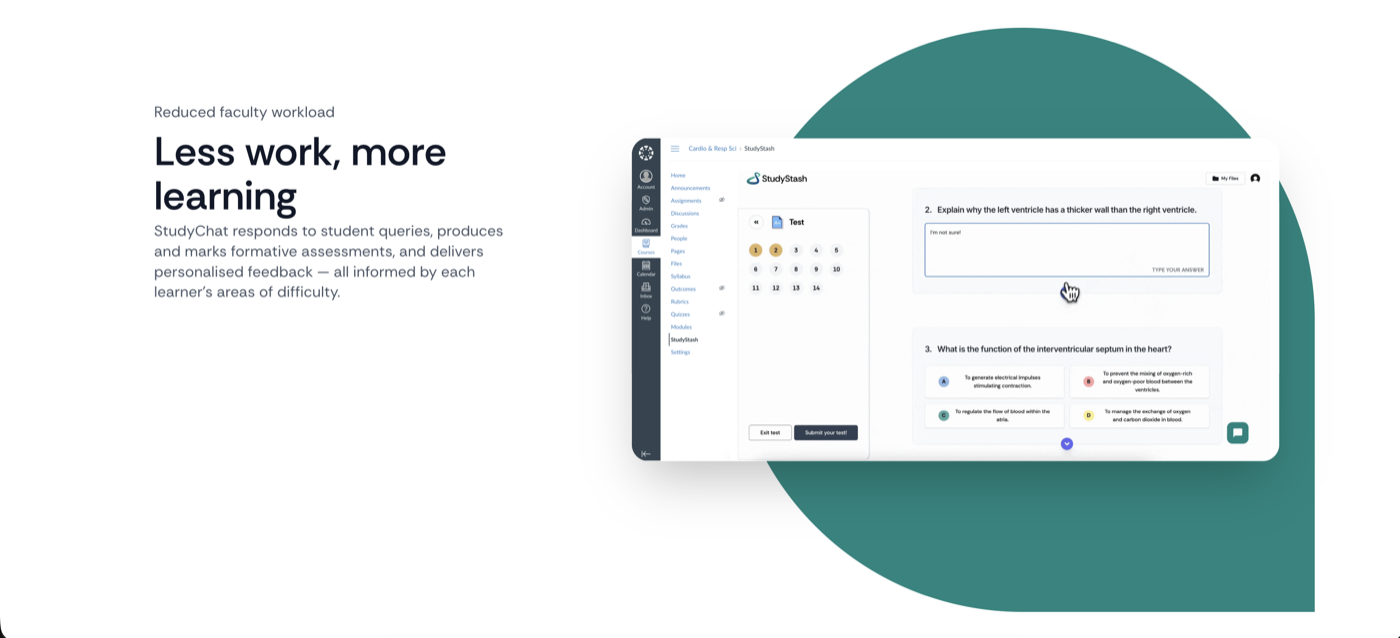
- Problem: personalized study material is a chore to assemble, and generic AI tools invent content outside what the teacher actually covered.
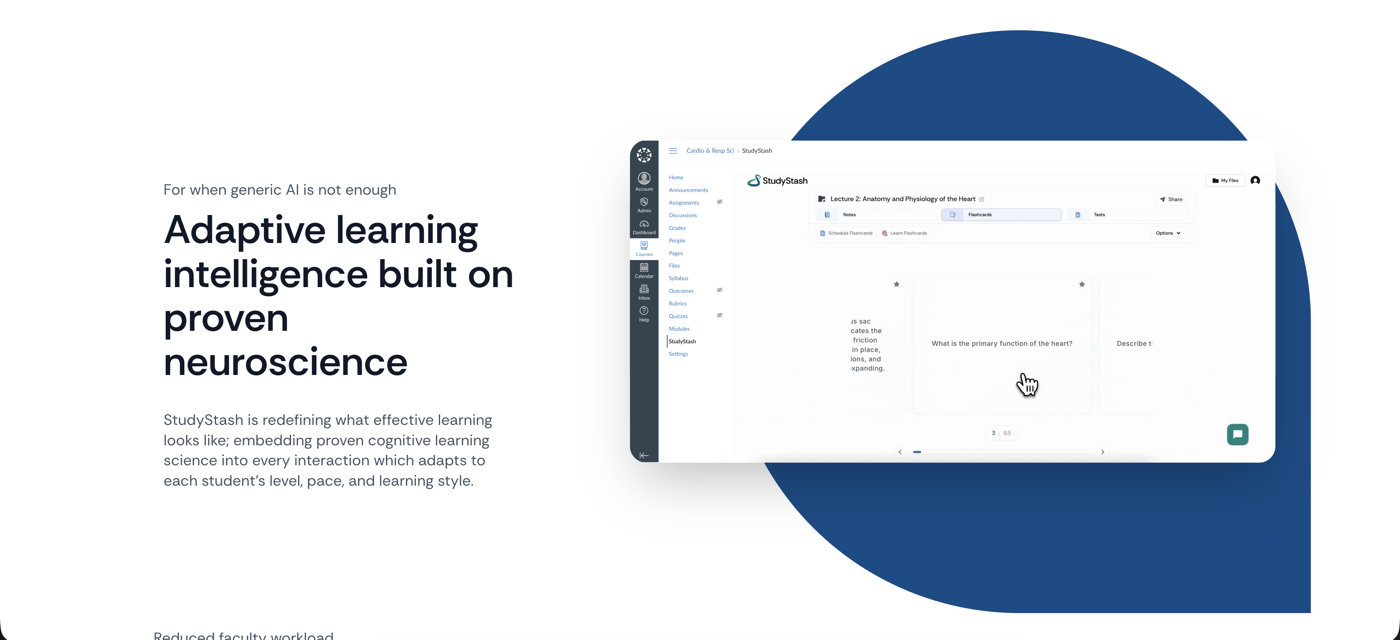
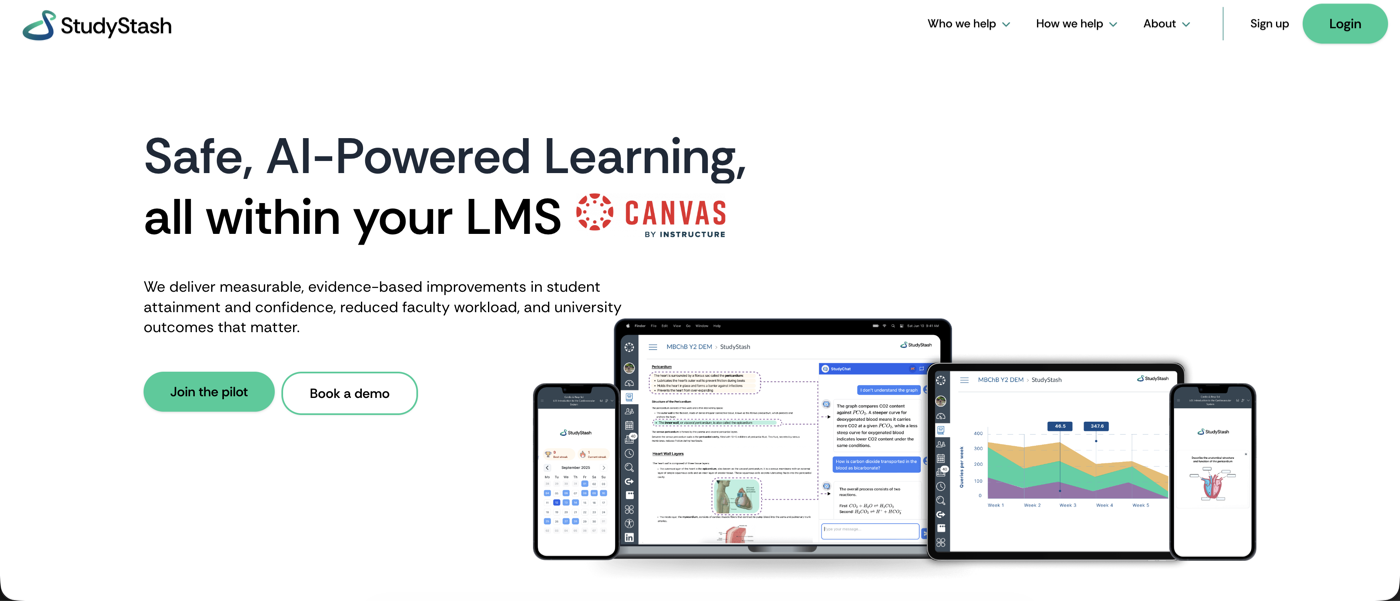
- How it solves it: it turns the course’s own material into flashcards, mock exams and even podcasts, adjusting the content as the student learns.
- Audience: university students — and, via Kortext, the institutions themselves, which gain visibility into where the class needs support.
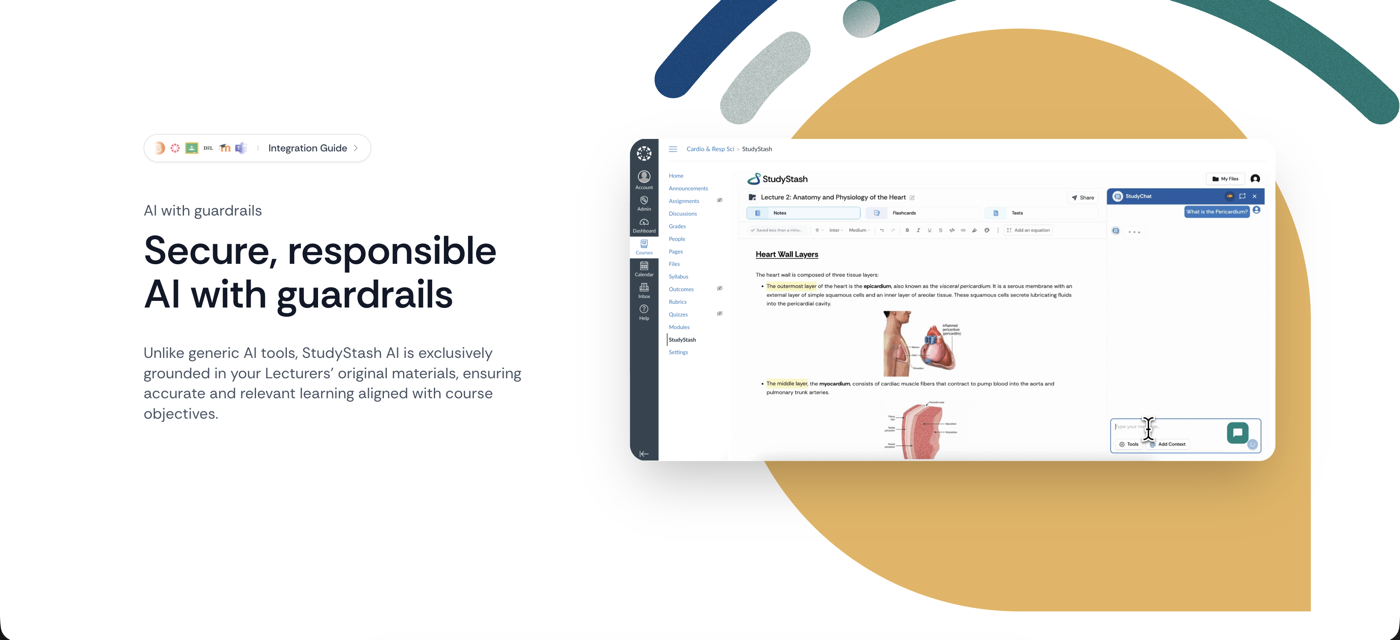
- What I found interesting: it is the build your own pain playbook, well executed — solve your own pain, distribute among peers and ride the AI timing. Grounding in the teacher’s material is what separates “just another flashcard generator” from a tool the institution trusts.
- What I would do differently: little to criticize in the trajectory. The risk I would watch is the post-acquisition phase — a founder’s product tends to lose its soul when it enters a larger structure.
- What we can learn: proximity to the problem + organic distribution + AI timing is a recipe that repeats. Building for your own pain remains the most accessible unfair advantage.
Technology
- What we know: the core is an AI grounded in the instructor’s original materials, plus an adaptive layer based on neuroscience, generating multiple formats from the same base.
- What I think: underneath runs a pipeline — the model answers from the teacher’s PDF or lecture, not “out of nowhere” — combined with a spaced-repetition algorithm that schedules review of the weak points. It is the grounding that makes an institution trust it.
- What you can learn from this: when error is unacceptable (academia, health, legal), grounding the AI in the client’s source is almost mandatory — it is what separates “a tool the institution adopts” from “a chatbot no one trusts”. And generating several formats (text, test, audio) from the same base is a cheap scale lever. The cost: you now depend on the quality of the input material.
Business
- General reading: the outcome tells the story — a student project that, in roughly 13 months and 160+ institutions across three continents, became a strategic acquisition by Kortext (Oct 2) for a figure the press estimates in eight-digit dollars. That says less about technology and more about fit: StudyStash reached where Kortext wanted to be (campus, especially in the US) faster than Kortext could have on its own. Founded by Ben Ward and Jonathan Graham, of the University of Birmingham, it is the kind of exit that validates the “build for your own pain” thesis.
- Defensibility: on its own, little — generating flashcards from a PDF has become a commodity. The real moat is institutional distribution (contracts with universities, integration with Kortext’s library), not the algorithm. That is exactly what Kortext bought.
- Metrics I would track: adoption inside each institution (how many students at the same university actually use it, not just sign-ups) and the impact teachers report on class performance — because in to higher education it is the institutional endorsement, not individual use, that renews (and expands) the contract.
Textbook execution: your own pain, organic distribution, AI timing. My bet on the future is the classic post-acquisition one: either Kortext gives it scale and the product becomes the standard in universities, or bureaucracy kills the soul that made students love it. I root for the first, but I put my chips on the risk of the second.
Teachoo — the tutor that refuses to hand over the answer
Pedagogically, perhaps the most provocative on the list. (Heads-up: the new product is teachoo.ai — not to be confused with teachoo.com, an Indian NCERT platform, which is a different company.) Product Hunt
Images: courtesy / Teachoo
Product
- Problem: the AI that solves the homework for you creates dependency and kills learning. “ChatGPT, do my assignment” is the opposite of studying.
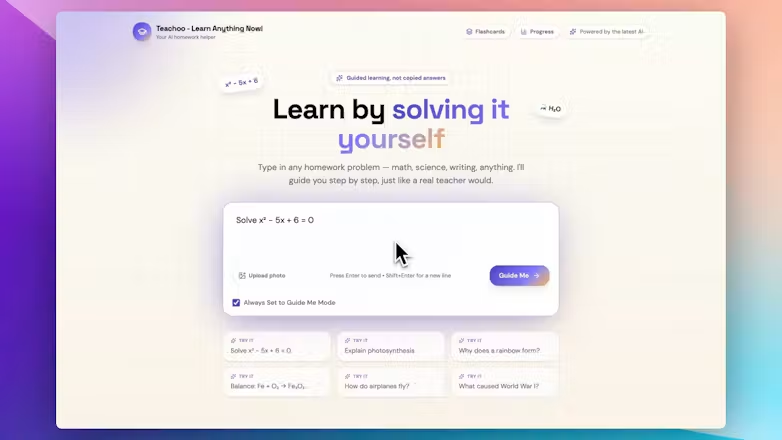
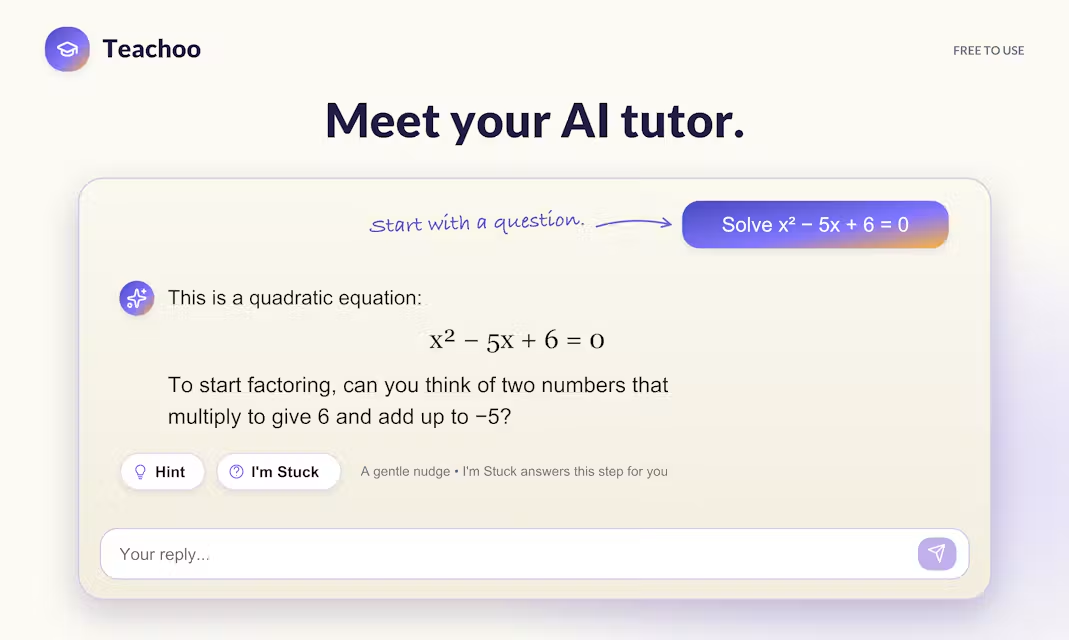
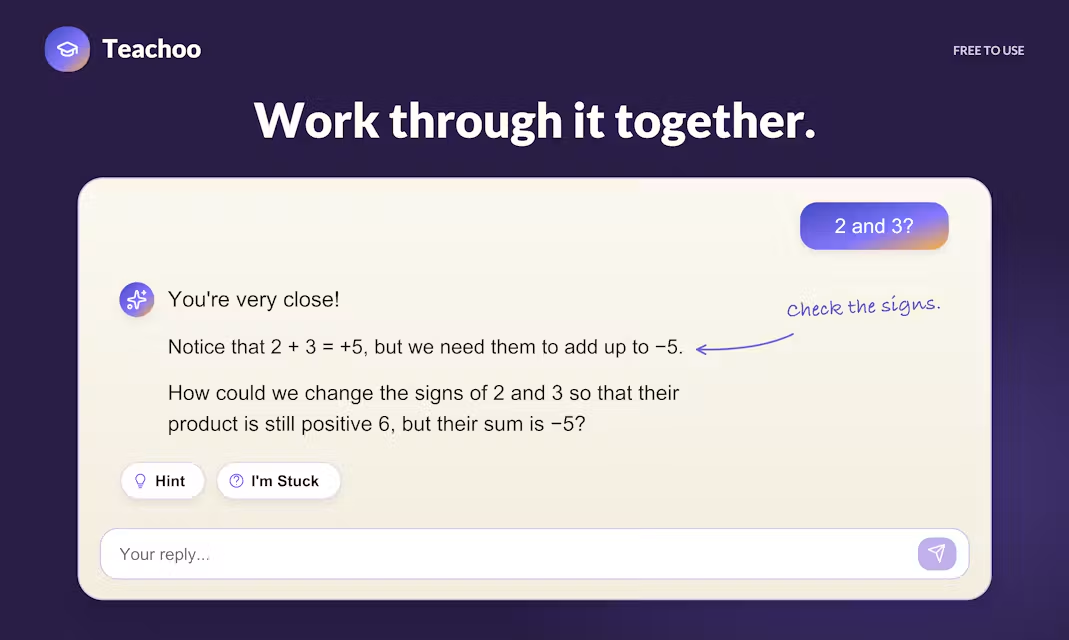
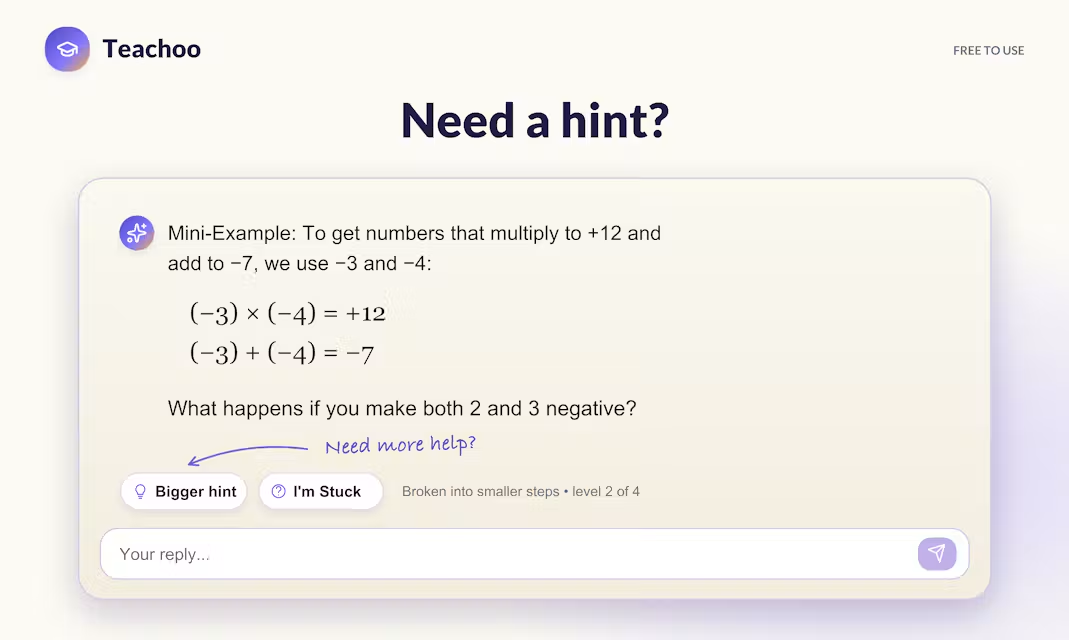
- How it solves it: you type or photograph a problem and the AI guides the solution one step at a time, with questions, hints and feedback — without handing over the answer. You can ask for a bigger hint or an explanation of a step.
- Audience: the student who wants to understand, not just finish the problem set.
- What I found interesting: it is a product decision that chooses learning over convenience. Rare and brave in a market that sells shortcuts.
- What I would do differently: I would obsessively measure autonomy over time — is the student needing fewer hints each week? If not, the has become dependency under another name. And I would solve the business model before inference cost eats the operation.
- What we can learn: there are at least four different AIs fighting for the same space — the one that solves, the one that teaches, the one that creates dependency and the one that develops autonomy. Knowing which one you are building is the central pedagogical decision.
Technology
- What we know: two blocks — with (a photo of the prompt becomes a structured problem) and a mediation, with an LLM instructed to guide through questions and progressive hints instead of giving the result.
- What I think: the detail that separates the serious from the superficial is where the lock lives. The good ones constrain the answer in the architecture (the model only releases the solution after the student reasons), not just by asking “please don’t answer” in the prompt, which the student breaks in two commands. I did not see the implementation from the inside, so that is the part I would confirm by using it.
- What you can learn from this: if the pedagogical goal is autonomy, controlling the AI through the prompt is fragile — the student always finds the shortcut. The right choice is to make the constraint structural (rules in the code, session states), even if it costs more engineering. OCR, in turn, knocks down the input friction: no one types an equation, everyone photographs it.
Business
- General reading: here lives the Achilles’ heel. It is free, hit #3 Product of the Day (267 points) and clearly plays for adoption before monetizing — but a Socratic tutor is expensive to run, because it converses (many steps, lots of inference) per student, and there is no obvious revenue in sight. The product is beautiful; the business does not exist yet. The risk is not competition, it is the inference bill growing faster than any monetization plan.
- Defensibility: low in its current state. Socratic mediation is replicable; what could become a moat is proprietary learning data (how each student reasons, where they get stuck) accumulated over time — but that only becomes a defense if they survive long enough to accumulate it.
- Metrics I would track: inference cost per active student (the metric that decides whether the company lives or dies) and the evolution of autonomy — fewer hints needed per session over the weeks — because it is the proof that the product truly teaches and, not by chance, also the argument that convinces a school to pay.
Pedagogically, my favorite on the list. Commercially, the riskiest. My bet: right product, still-wrong business model. Either it finds a B2B angle (schools paying for their students' autonomy) or it becomes a beautiful, unsustainable portfolio project. I really hope they make it.
Kholo — turning science into an explorable toy
Two stories in a single product. Product Hunt
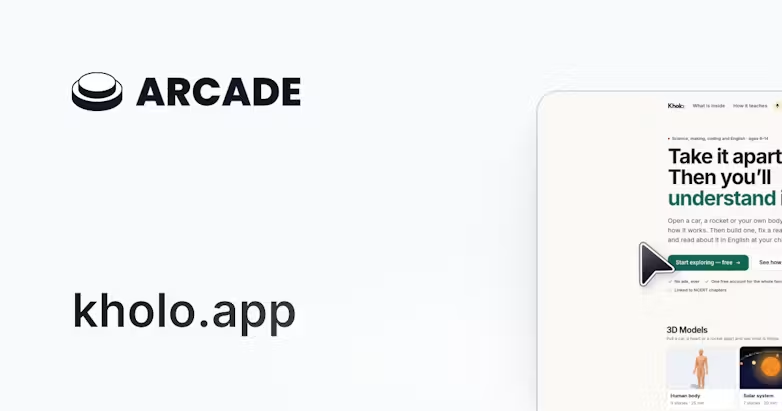
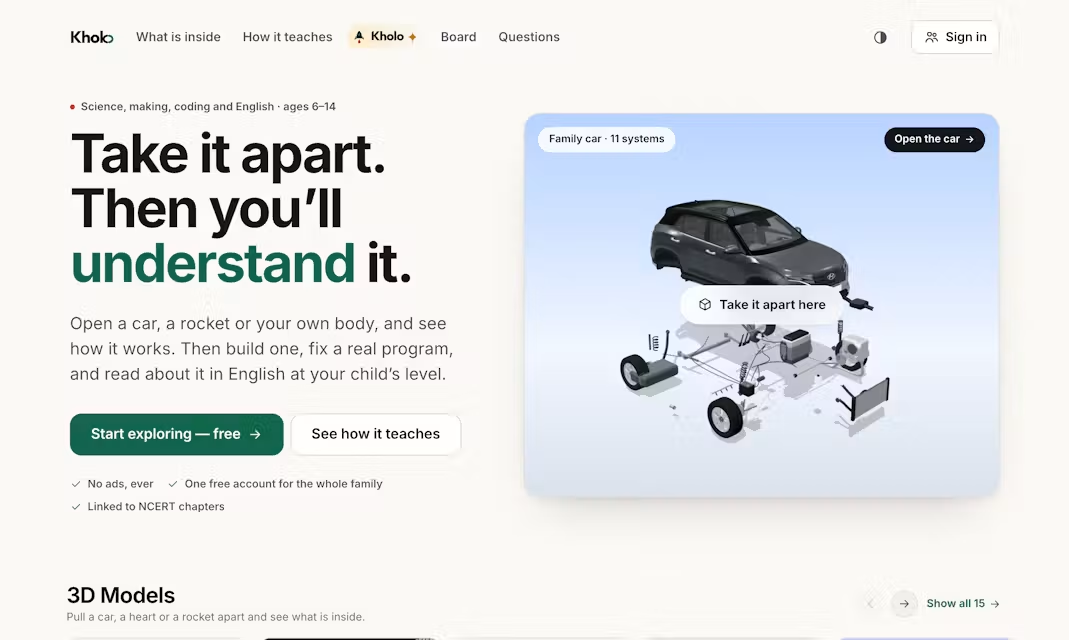
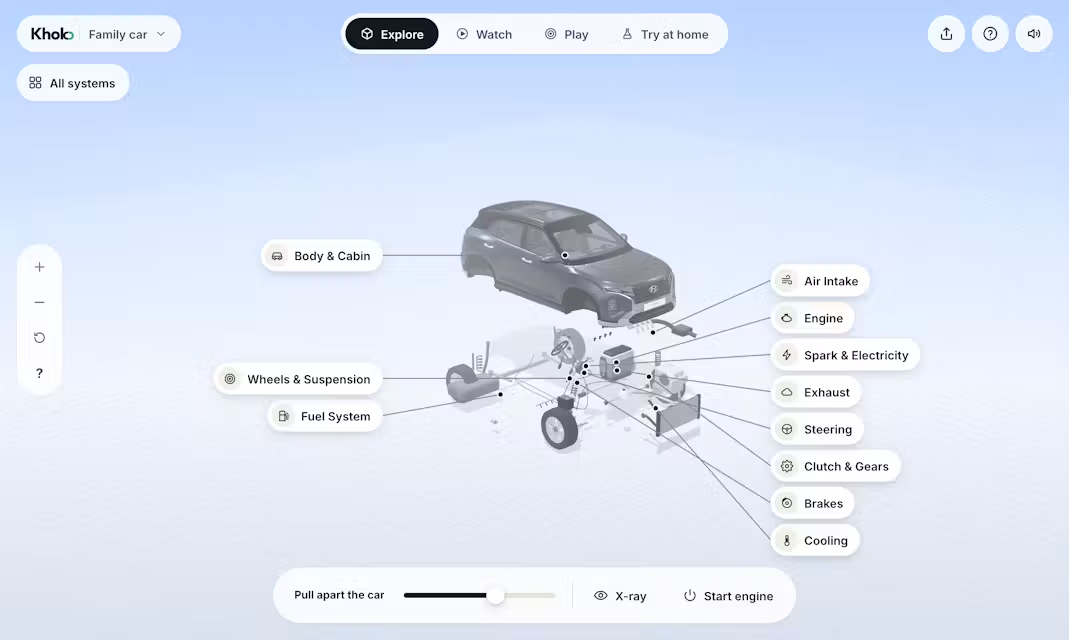
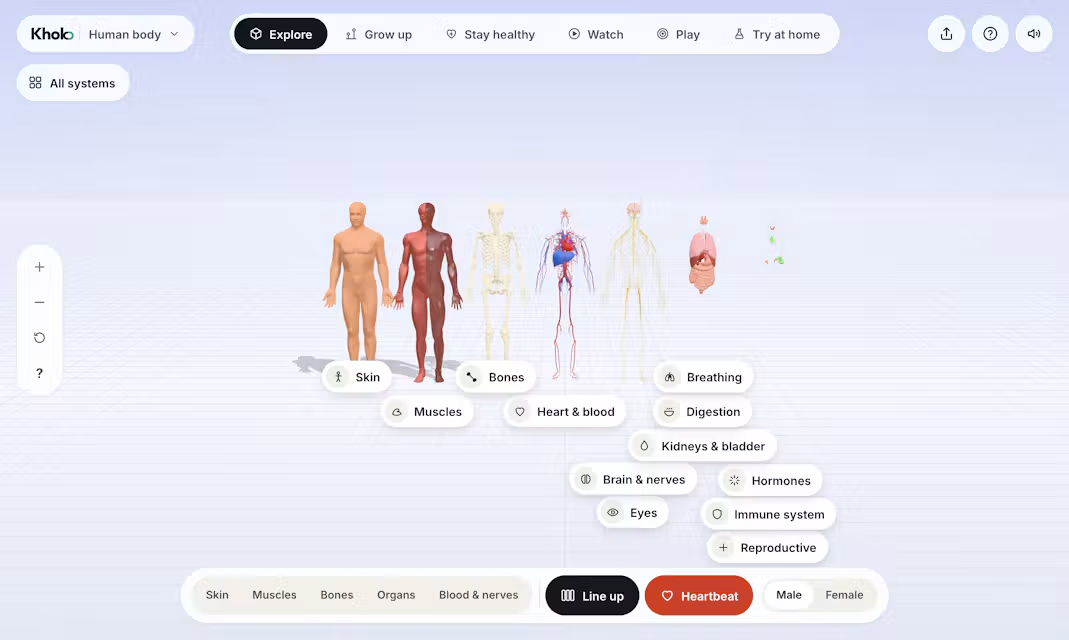
Images: courtesy / Kholo
Product
- Problem: science taught abstractly does not stick with a child — there is no manipulating, taking apart, exploring.
- How it solves it: children aged 6 to 14 take apart cars, rockets and the human body in 3D, read real Python line by line before running the code, and advance through stories in English at their own level.
- Audience: children aged 6 to 14; initial focus on India, with content aligned to the local curriculum.
- What I found interesting: it is not just a new way to teach science. It is a sign that the cost of building an ambitious edtech product has dropped drastically (see technology).
- What I would do differently: I would make sure the 3D “wow” does not overshadow conceptual depth — enchantment is the door, understanding is the house. And I would validate performance on modest devices.
- What we can learn: AI coding changed the economics of building educational products. The barrier now is less technical and more about pedagogical vision.
Technology
- What we know: 3D objects that open into parts right in the browser, a Python reader with step-by-step execution and an adaptive English reading module — all with nothing to install.
- What I think: the pattern behind it is the flow, which renders interactive 3D with in the browser. There is also a community report that much of the product was supposedly built by a single person, with heavy AI-coding support (Claude Code); I did not confirm that in an official source, so I treat it as a report — but true or not, the point stands.
- What you can learn from this: 3D in the browser allows a rich experience without the friction of installing an app — decisive in education, where every setup step drops half the students. The cost almost no one measures: performance on an entry-level phone. Beautiful on the desktop can stutter on the child’s real device. Test on your audience’s worst device first.
Business
- General reading: it is early — a recent Product Hunt debut, a likely B2C subscription per family or student, no traction to assess yet. What interests me here is not the P&L, it is the signal: if a founder builds an educational 3D engine almost single-handedly, the cost of raising an ambitious edtech has plummeted. That changes the economics of the whole sector, not just Kholo’s.
- Defensibility: the interactive 3D is beautiful, but replicable with the same open tools. The moat will have to come from content (quantity and quality of models, curriculum alignment) and distribution (schools, partnerships in India) — not from the technology itself.
- Metrics I would track: weekly retention of the children (3D enchants on day one; the test is week four) and depth of use — does the child only “play at taking things apart” or does she get to reading and running the Python? Because that is the difference between a viral toy and an educational product the family renews.
The product delights me and the subtext interests me even more: if you can build this almost single-handedly, the barrier to creating edtech has stopped being technical. My bet: the competitive advantage shifts from "who knows how to code" to "who has pedagogical vision". That changes who can get into the game — and it is the best news of the issue for anyone who reads EduBuilders.
The pattern that started to appear
Five builders, five different bets — but one shared tension. They all deal with the same uncomfortable question: does AI, in education, help the person learn or just finish faster?
Scholé bets on learning by doing. Mallow takes the screen out of the way. StudyStash is born from the pain of someone studying and grounds the AI in the teacher’s material. Teachoo refuses to hand over the answer. Kholo lets the child take the world apart — and shows that building this got cheap. None of them treats AI as an end. They all treat it as a means to a specific pedagogical hypothesis.
Two technical patterns repeat and are worth noting — because they are stack decisions you will face too. The first is , anchoring the model in trusted material (Scholé and StudyStash) as a response to hallucination: choose this when error is costly. The second is AI as a mediator, not an executor (Teachoo, and partly Scholé) as a response to dependency: choose this when the goal is autonomy, and make the rule structural, not just a request in the prompt.
That is exactly where the work of anyone who truly builds education lives: not asking “how do I put AI in this?”, but “which hypothesis about how people learn am I willing to test?”.
This is issue #1. Every week I select, analyze and record — and, a few dozen issues from now, this base will tell a story about where education is heading that no single headline can tell.